Box styles sound like jargon until you realise each one exists to solve a specific problem: assembly speed, shipping durability, shelf display, or perceived value. Pick the wrong one and you will fight it on every order.
This is the plain-English version. Three material families, then the constructions inside them, and a quick chooser at the end.
Key takeaways
- Three families cover almost everything: folding cartons, corrugated, and rigid.
- Folding cartons are for retail; corrugated is for shipping; rigid is for luxury.
- Tuck-end cartons are the cheapest, fastest, most flexible retail option.
- Mailers self-lock and need no tape, which is why DTC brands default to them.
- Rigid boxes ship assembled, so freight and storage cost more than flat-packed styles.
First, the three material families
Before construction, decide which family you are in. This single choice sets your cost band, your durability, and your unboxing feel.
| Family | What it is | Primary job |
|---|---|---|
| Folding carton | Single-layer paperboard, ships flat | Retail shelf presence at low cost |
| Corrugated | Fluted layer between liners, ships flat | Protecting products in transit |
| Rigid | Thick greyboard wrapped in printed paper, ships assembled | Signalling luxury and permanence |
Tuck-end cartons (straight and reverse)
The workhorse of retail packaging. A flat paperboard blank folds into a box with flaps that tuck closed at the ends. Straight tuck has both flaps opening from the same direction, which looks tidier on shelf; reverse tuck alternates them, which is marginally cheaper to produce.
Cheap, fast to assemble by hand, and endlessly printable. If your product is small to medium and sold in retail or online, this is the default starting point.
- Best for cosmetics, supplements, soap, snacks, and small retail goods
- Lowest cost per unit of any custom printed carton
- Not protective on its own — add an insert for fragile items
Mailer and shipping boxes
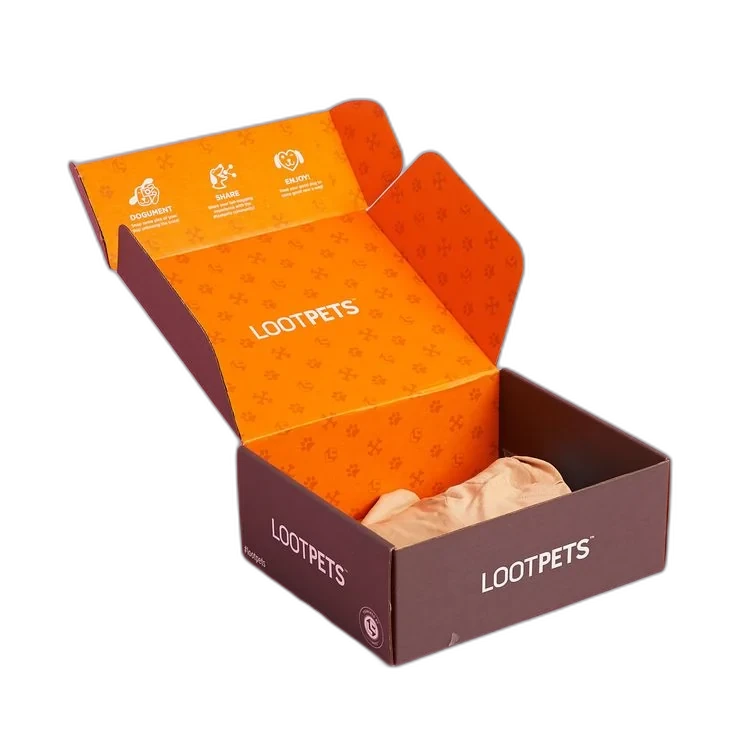
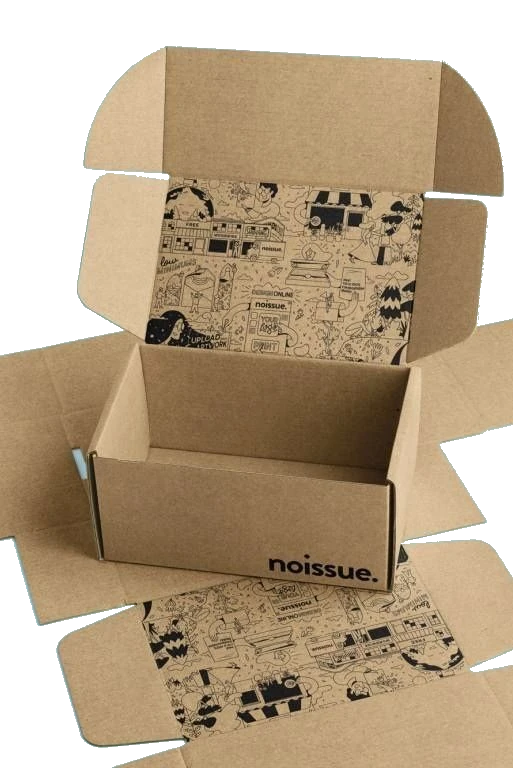
A corrugated box with wing flaps that fold and lock without tape. The customer lifts the lid rather than cutting it open, which is why every unboxing video features one.
Corrugation means flute choice matters. E-flute is thin with a smooth surface that prints well, suiting retail-facing mailers. B-flute is thicker and better at absorbing courier abuse.
- Best for ecommerce, subscription boxes, apparel, and gift sets
- Self-locking — no tape or glue needed at pack-out
- Prints beautifully inside as well as outside
Sleeve and tray-and-sleeve
A printed sleeve slides over a base — either a simple carton or a rigid tray. The sleeve carries the branding while the tray holds the product, which creates a genuinely satisfying two-part reveal.
It is also the most practical way to run multiple variants economically: keep one tray and print different sleeves per flavour, scent, or edition.
- Best for gift sets, multi-SKU ranges, subscription editions, and electronics
- One base plus many printed sleeves keeps versioning cheap
- Two-piece assembly adds a small amount of pack-out time
Specialty folding cartons
These are variations built for a specific handling or display problem rather than general use.
| Style | Best for |
|---|---|
| Auto-bottom | Heavier products — the base locks itself as the box is opened, so it assembles fast and holds weight |
| Gable | Takeaway food and gift packs; the built-in handle makes it carryable |
| Pillow | Small, light items like jewellery, favours, and accessories — very low cost, high charm |
| Window | Anything customers want to see before buying, especially food, candles, and toys |
| Hang-tab | Peg-hook retail display where shelf space is vertical, not horizontal |
| Display / counter | Point-of-sale units that hold multiple units and double as their own merchandiser |
Rigid (setup) boxes
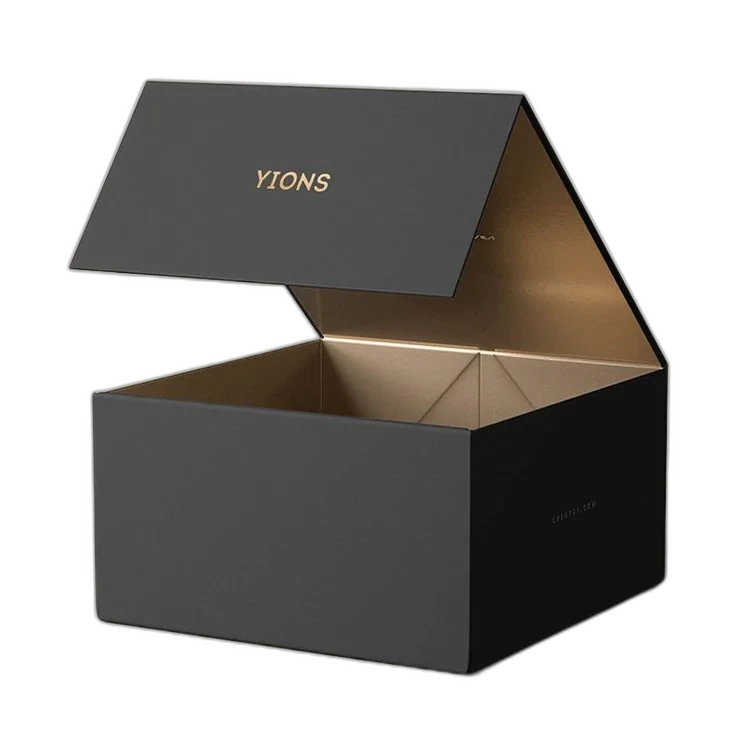
Thick greyboard wrapped in printed paper, assembled at the factory rather than by you. This is the construction used for premium electronics, fine jewellery, fragrance, and anything positioned as a keepsake.
The trade-offs are real: rigid boxes cost more per unit, carry higher minimum orders, take longer to produce, and ship pre-assembled, which means you pay to move air. In exchange, nothing else feels as expensive in the hand.
- Best for luxury goods, premium gifting, and high-value electronics
- Supports magnetic closures, ribbon pulls, and moulded inserts
- Higher freight and storage cost because it does not ship flat
Quick chooser
If you want one sentence per situation, this is it.
- Selling small retail products on a budget — straight or reverse tuck carton.
- Shipping direct to customers — corrugated mailer box.
- Heavy product in a folding carton — auto-bottom.
- Multiple variants of one product — tray and printed sleeves.
- Customer needs to see the product — window box.
- Positioning as luxury or a gift to keep — rigid box.
Frequently asked questions
On a straight tuck box both closure flaps open from the same direction, which gives a cleaner front-facing appearance on shelf. On a reverse tuck they open from opposite directions, which uses slightly less board and is marginally cheaper to produce.
Want this reviewed on your own project?
Send us your product details and our team will recommend a construction and stock, supply a free dieline and 3D mockup, and price two or three options — within 24 hours.